




-
Mining Work Health, Safety Laws and Serious Industrial Crimes in Australia: Down the Shaft of Jurisdictional Inconsistency -
Algorithmic Bias as a Core Legal Dilemma in the Age of Artificial Intelligence: Conceptual Basis and the Current State of Regulation -
Durable Protection in the European Union: The Case of Persons Fleeing Armed Conflicts -
Examining the Impact of the Nationality and Borders Act 2022 on Refugee Women
Journal Description
Laws
Laws
is an international, peer-reviewed, open access journal on legal systems, theory, and institutions, published bimonthly online by MDPI.
- Open Access— free for readers, with article processing charges (APC) paid by authors or their institutions.
- High Visibility: indexed within Scopus, ESCI (Web of Science), RePEc, vLex Justis, CanLII, Law Journal Library, and other databases.
- Journal Rank: JCR - Q2 (Law) / CiteScore - Q1 (Law)
- Rapid Publication: manuscripts are peer-reviewed and a first decision is provided to authors approximately 43 days after submission; acceptance to publication is undertaken in 6.5 days (median values for papers published in this journal in the second half of 2025).
- Recognition of Reviewers: reviewers who provide timely, thorough peer-review reports receive vouchers entitling them to a discount on the APC of their next publication in any MDPI journal, in appreciation of the work done.
- MDPI’s Journal Cluster of Social Studies: Challenges-Journal of Planetary Health, Disabilities, Genealogy, Laws, Sexes, Social Sciences and Societies.
Impact Factor:
1.1 (2024);
5-Year Impact Factor:
1.4 (2024)
Latest Articles
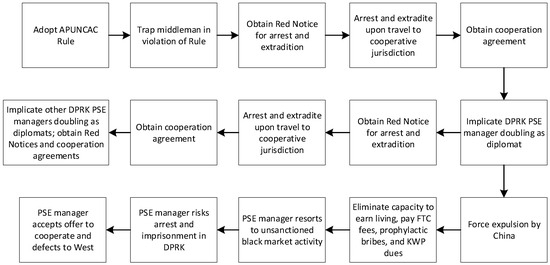
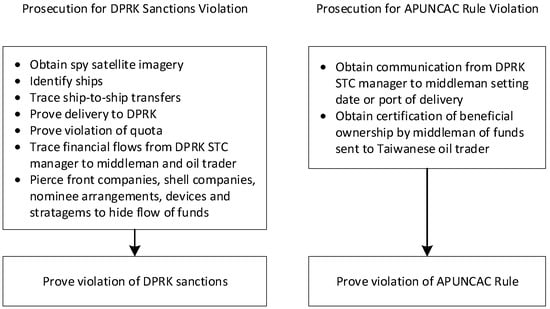
The APUNCAC Strategy to Counter DPRK Sanctions Evasion
Laws 2026, 15(1), 9; https://doi.org/10.3390/laws15010009 - 26 Jan 2026
Abstract
►
Show Figures
Transnational organized criminal groups operate in ways that are resistant to prosecution. In response, a proposed change in domestic law would aim to ensnare front men who serve to hide the identities of criminals, enabling prosecutors to flip them via cooperation agreements, thereby
[...] Read more.
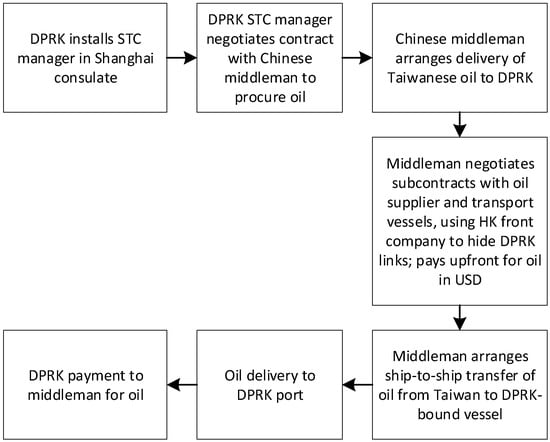
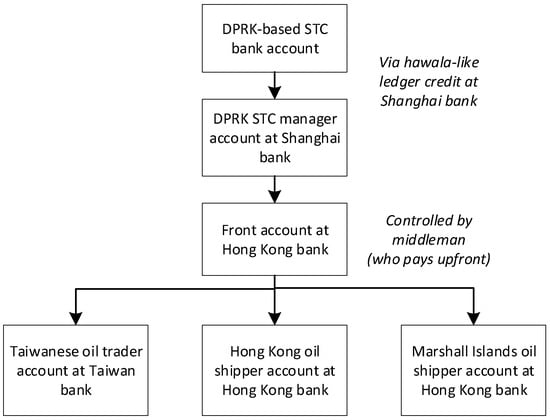
Transnational organized criminal groups operate in ways that are resistant to prosecution. In response, a proposed change in domestic law would aim to ensnare front men who serve to hide the identities of criminals, enabling prosecutors to flip them via cooperation agreements, thereby unraveling transnational criminal schemes. The proposal would require the ultimate beneficial sender, and ultimate beneficial recipient, to certify beneficial ownership (as sender and recipient) when funds are transacted in amounts exceeding USD 3000; and would require foreign financial institution personnel, who handle transactions with a nexus to a party to the Rule, to collect and submit, to a central law enforcement database, certifications by the ultimate beneficial sender and recipient of covered funds that are deposited, transmitted, transferred, or paid. Analysis of the proposed change in law indicates that it may be effective in addressing the impunity that prevails when organized criminal groups operate in China and North Korea in ways that appear to be outside the reach of domestic U.S. law enforcement authorities.
Full article
Open AccessArticle
An Insolvency Toolkit for SMEs in Emerging Economies—A Spotlight on Uganda
by
Hamiisi Nsubuga
Laws 2026, 15(1), 8; https://doi.org/10.3390/laws15010008 - 22 Jan 2026
Abstract
This article examines the subject of SME failures due to financial distress in emerging economies by focusing on Uganda as a case study. It adopts a convergent doctrinal and empirical approach, drawing on existing black letter law and literature alongside some of the
[...] Read more.
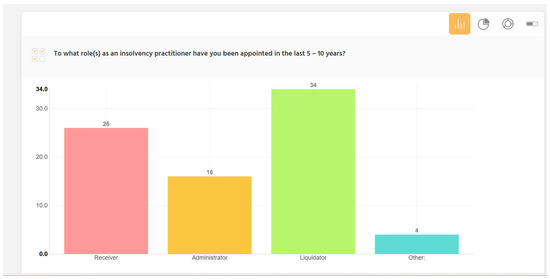
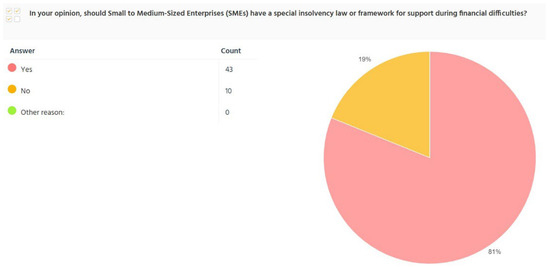
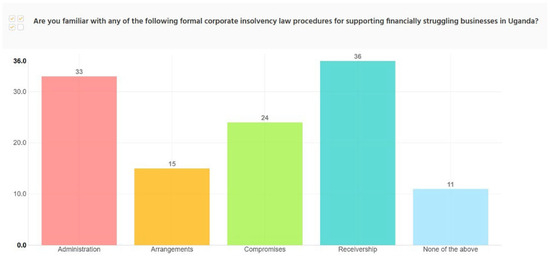
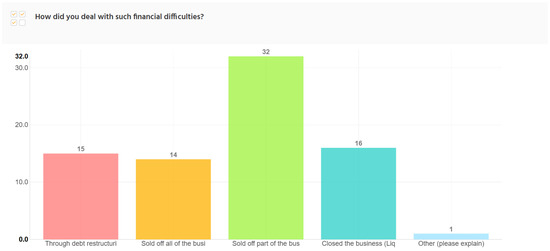
This article examines the subject of SME failures due to financial distress in emerging economies by focusing on Uganda as a case study. It adopts a convergent doctrinal and empirical approach, drawing on existing black letter law and literature alongside some of the empirical data obtained from a survey of SME business owners impacted by financial distress, a survey of accredited insolvency practitioners and exchanges from a stakeholder workshop on SME insolvencies in Uganda. The article examines existing legal, regulatory and procedural frameworks on corporate rescue and the identified gaps exacerbating SME failures in unpacking why, despite the availability of these frameworks, business rescue as the policy objective of Uganda’s insolvency law has yet to be fully achieved. The article devises a recommended toolkit that if adopted, may guide the approaches needed to improve SME rescue, and meet legal and statutory objectives of Uganda’s insolvency frameworks to enhance economic stability.
Full article
(This article belongs to the Special Issue Developments in International Insolvency Law: Trends and Challenges)
►▼
Show Figures

Figure 1
Open AccessArticle
Towards a Renewed Civic Pragmatism: Integrating Policy, Law, and Statistical Literacy in Civics Education
by
Phillip Marcial Pinell
Laws 2026, 15(1), 7; https://doi.org/10.3390/laws15010007 - 21 Jan 2026
Abstract
Since 2017, more than a dozen civics institutes have been founded at America’s public universities, marking a renaissance in civic education. Grounded in the liberal arts, these institutes rightly restore the pursuit of knowledge for its own sake and reconnect citizens to the
[...] Read more.
Since 2017, more than a dozen civics institutes have been founded at America’s public universities, marking a renaissance in civic education. Grounded in the liberal arts, these institutes rightly restore the pursuit of knowledge for its own sake and reconnect citizens to the nation’s past. Yet liberal education requires assistance to help students navigate today’s data-driven republic, where questions of law and justice increasingly turn on the interpretation of evidence. This article proposes a balanced model for civics education—a “renewed civic pragmatism”—that unites the historical connectedness of liberal learning with the technical skills required for public life and the rule of law. In doing so, civics education recovers its role as a bridge between moral principle, empirical judgment, and the pursuit of justice under law.
Full article
(This article belongs to the Special Issue Vol. II of Civic Engagement, Justice, and the Law in a National and International Context)
Open AccessSystematic Review
Constitutional Rights in Educational Administration: A Bibliometric Analysis of Global Scholarship
by
Sabah M. A. Al Momani
Laws 2026, 15(1), 6; https://doi.org/10.3390/laws15010006 - 21 Jan 2026
Abstract
►▼
Show Figures
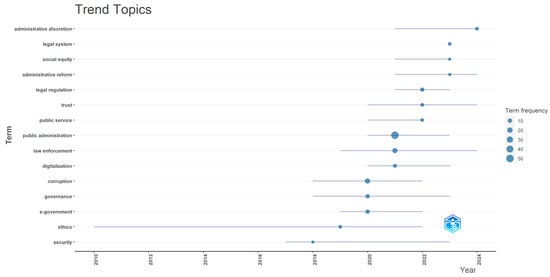
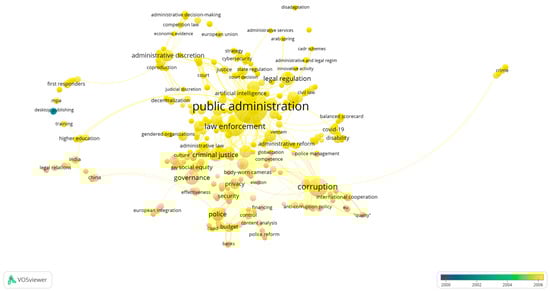
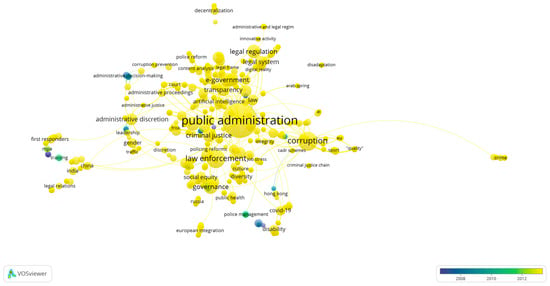
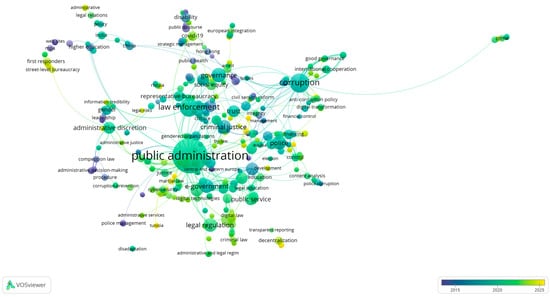
This study represents a bibliometric analysis of the global scholarship on institutional rights in education, based on 192 reviewed publications from the Web of Science database, which includes the 2000–2025 period. Research has developed in three different phases: the initial phase (2000–2006) focused
[...] Read more.
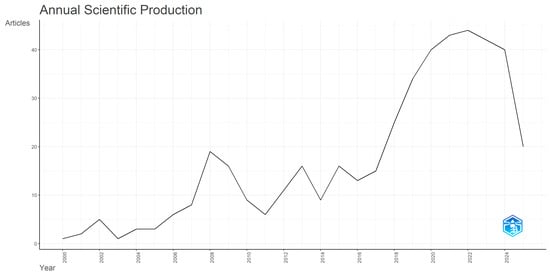
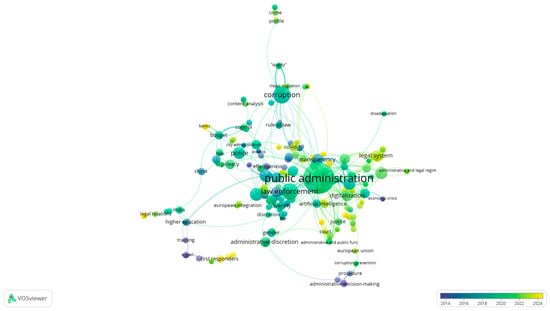
This study represents a bibliometric analysis of the global scholarship on institutional rights in education, based on 192 reviewed publications from the Web of Science database, which includes the 2000–2025 period. Research has developed in three different phases: the initial phase (2000–2006) focused on basic topics such as legal regulation, provision of public services, and administrative discretion; the developmental phase (2007–2013) addressed increasing emphasis on representative bureaucracy, availability, and judicial intervention; and the rapid development phase (2014–2025) emphasized digital transformation, transparency, and international cooperation. The keyword analysis reveals a thematic shift from traditional topics such as the “legal system” and “public service” to current issues such as “digital administration,” “social justice,” and “representative bureaucracy.” Research production remains geographically concentrated in North America and Europe, and contributions from Asia, Latin America, and Africa appear. The main institutions include Harvard University, Oxford University, and Leiden University, while influential authors such as Cooper K.W., Schiff D., and Busuioc E.M. have shaped theoretical and empirical advances. Network visualization and historical clustering illustrate the developing thematic structure and interconnection in the field. This analysis provides valuable knowledge for politicians, educators, and researchers who, in the dynamic global context, navigate the penetration of constitutional principles and education management.
Full article

Figure 1
Open AccessArticle
The Collingridge Dilemma and Its Implications for Regulating Financial and Economic Crime (FEC) in the United Kingdom: Navigating the Tension Between Innovation and Control
by
Adam Abukari
Laws 2026, 15(1), 5; https://doi.org/10.3390/laws15010005 - 15 Jan 2026
Abstract
The capacity of the United Kingdom (UK) to prosecute technology-enabled financial and economic crime (FEC) is increasingly shaped by the Collingridge dilemma. Even though the dilemma was broadly conceptualized in technology governance, its application to prosecutorial and enforcement practice, evidentiary standards, and criminal
[...] Read more.
The capacity of the United Kingdom (UK) to prosecute technology-enabled financial and economic crime (FEC) is increasingly shaped by the Collingridge dilemma. Even though the dilemma was broadly conceptualized in technology governance, its application to prosecutorial and enforcement practice, evidentiary standards, and criminal liability attribution represents uncharted scholarly territory. Through socio-legal mixed methods combining doctrinal analysis, case studies, and comparative analysis, the paper shows how the dilemma’s two horns or pillars (i.e., early epistemic uncertainty and late institutional inertia) manifest in criminal law and regulatory contexts. The paper finds that just like the European Union and United States, the UK criminal enforcement ecosystem exhibits both horns across cryptocurrency, algorithmic trading, artificial intelligence (AI), and fintech domains. By integrating supplementary theories such as responsive regulation, precautionary principles and technological momentum, the study advances a socio-legal framework that explains enforcement inertia and doctrinal gaps in liability attribution for emerging technologies. The paper demonstrates how epistemic uncertainty and institutional entrenchment shape enforcement outcomes and proposes adaptive strategies for anticipatory governance including technology-literate capacity building, anticipatory legal reform, and data-driven public-private coordination. These recommendations balance ex-ante legal clarity (reducing uncertainty) with ex-post enforcement agility (overcoming entrenchment) to provide a normative framework for navigating the Collingridge dilemma in FEC prosecution.
Full article
Open AccessArticle
Electoral Justice in Jordan: Judicial Oversight of Appeals Between Legitimacy and Participation
by
Abeer Hassan Al-Qaisi, Rehan Naji Abu Elzeet, Mutasem Khaled Heif, Shadi Meeush D’yab Altarawneh, Loiy Yousef Aldaoud and Mostafa Hussam Altarawneh
Laws 2026, 15(1), 4; https://doi.org/10.3390/laws15010004 - 29 Dec 2025
Abstract
This study evaluates the effectiveness of Jordan’s judiciary in overseeing electoral appeals within the framework of a constitutional monarchy. Adopting a mixed-methods approach, it combines doctrinal legal analysis of key constitutional provisions and Election Law No. 4 of 2022 with a comparative examination
[...] Read more.
This study evaluates the effectiveness of Jordan’s judiciary in overseeing electoral appeals within the framework of a constitutional monarchy. Adopting a mixed-methods approach, it combines doctrinal legal analysis of key constitutional provisions and Election Law No. 4 of 2022 with a comparative examination of electoral adjudication in Tunisia, Egypt, and Lebanon. The study is further strengthened by a structured content analysis of 120 appellate rulings issued between 2015 and 2023 and by qualitative insights drawn from anonymized interviews with judicial personnel engaged in electoral dispute resolution. Although Jordan’s legal framework formally empowers the judiciary to adjudicate electoral disputes, five structural limitations persist: narrow standing rules, rigid evidentiary thresholds, judicial reluctance to exercise investigatory powers, opaque reasoning in judgments, and the absence of specialized electoral courts. These constraints reflect systemic tensions between formal judicial independence and the realities of constrained discretion in hybrid regimes. An empirical analysis of 127 Jordanian electoral appeal cases from 2013 to 2020 reveals that a mere 7% of disputed electoral outcomes were overturned, whereas 73% of allegations were disregarded due to insufficient evidence. Furthermore, it is noteworthy that only 31% of rulings were publicly accessible, in stark contrast to the 89% accessibility rate observed in Tunisia. By identifying and addressing these systemic limitations, the study contributes to ongoing discourse on institutional reform and democratic resilience. In doing so, it underscores the importance of robust electoral justice mechanisms for sustaining public trust, rule of law, and inclusive governance—principles central to political and institutional sustainability as reflected in Sustainable Development Goal 16.
Full article
Open AccessArticle
Transposition and Implementation of European Union Renewable Energy Legislation in France, Italy, and Germany: A Regulatory Perspective and a Comprehensive Analysis of Opportunities and Challenges
by
Ana Maria Fagetan
Laws 2026, 15(1), 3; https://doi.org/10.3390/laws15010003 - 29 Dec 2025
Abstract
This article provides a detailed comparative analysis of the transposition and implementation of the Renewable Energy Directives II and III (RED II and RED III), REPowerEU Plan, and the ‘Fit for 55’ package in France, Italy, and Germany. The analysis highlights the objectives,
[...] Read more.
This article provides a detailed comparative analysis of the transposition and implementation of the Renewable Energy Directives II and III (RED II and RED III), REPowerEU Plan, and the ‘Fit for 55’ package in France, Italy, and Germany. The analysis highlights the objectives, key legislative provisions, and national-scale achievements, challenges, advantages, and disadvantages—including implications for investment conditions and renewable energy financing mechanisms—associated with these pivotal European Union legislative frameworks, which, to a certain extent, induced a paradigm shift with varying degrees of impact in every Member State. The work is divided into four parts that follow this brief introductory outline of the problem. The introduction presents legal developments in renewable energy law in the European Union. The second part offers a comprehensive and in-depth examination of the European Union’s renewable energy regulatory framework and research gaps that hinder doctrinal tensions within the EU’s renewable energy legislative framework. In the third part, we analyze the transposition and implementation of each mentioned directive in the selected countries. The last part highlights commonalities, divergences, challenges, best practices, and lessons learned from each nation’s approach. This comparative analysis predicts that implementation success is inversely linked to administrative divergence, with France’s centralized legal system facilitating effective bureaucratic streamlining and higher predicted deployment, while the fragmented governance structures of Germany and Italy serve as structural impediments that critically undermine the EU’s acceleration mandate.
Full article
Open AccessArticle
Custodian of Autonomous AI Systems in the UAE: An Adapted Legal Framework
by
Mohamed Morsi Abdou
Laws 2026, 15(1), 2; https://doi.org/10.3390/laws15010002 - 25 Dec 2025
Abstract
►▼
Show Figures
The existence of a legal framework for Artificial Intelligence systems is of great importance for the growth and development of this advanced technology, especially given the growing sense of legal insecurity that may arise from potential irreparable harm. Therefore, the issue of legal
[...] Read more.
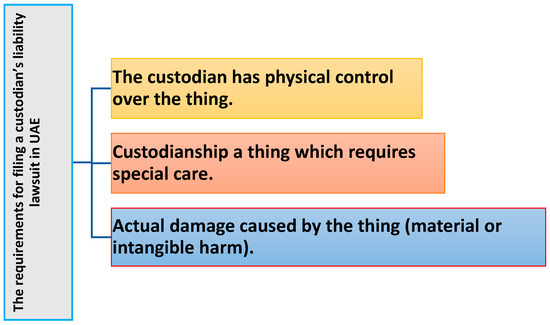
The existence of a legal framework for Artificial Intelligence systems is of great importance for the growth and development of this advanced technology, especially given the growing sense of legal insecurity that may arise from potential irreparable harm. Therefore, the issue of legal liability for AI systems is one of the most critical legal topics that should receive the attention of legal literature. This paper critically examines the tempting analogy between the liability of custodians and the liability of operators of AI systems under UAE law. This paper seeks to address this legal gap, by offering suggestions and sharing examples of the legal requirements necessary to establish appropriate liability rules for AI. This legal gap can be filled by improving the provisions of custodian liability in UAE law. Our analysis focuses on three main concerns: (i) proposing an expansion of the concept of thingness; (ii) discussing the challenges of applying legal custodianship; and (iii) concluding that autonomous AI systems are inherently dangerous. In this context, it is particularly important to analyse the specific aspects that should be taken into consideration when operating advanced AI systems, which include mandatory registration and insurance. The article concludes that applying the custodian liability provisions to the operators of AI systems ensures the protection of third parties from potential damage on one hand. On the other hand, the specific regulations governing the operation of these AI systems encourage investment in this vital field.
Full article

Figure 1
Open AccessArticle
UK Consumer Protection and the Debate for Reform in Medical Device Liability
by
Nicholas T. H. Farr, Elliot J. Owen and Rohan M. Bhalekar
Laws 2026, 15(1), 1; https://doi.org/10.3390/laws15010001 - 20 Dec 2025
Abstract
►▼
Show Figures
The long-stop rule, under the UK Consumer Protection Act (CPA) 1987, imposes a 10-year limitation period for product liability claims, providing legal certainty for manufacturers and consumers. However, this timeframe is increasingly problematic in the case of medical devices, particularly implantable ones, which
[...] Read more.
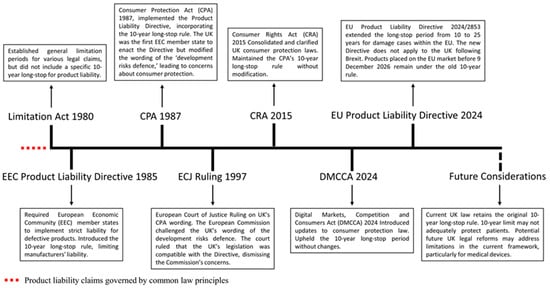
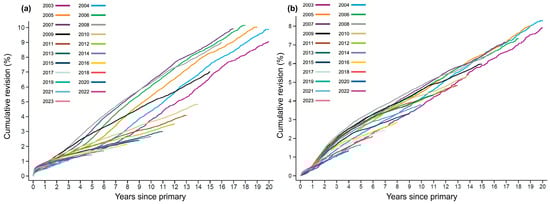
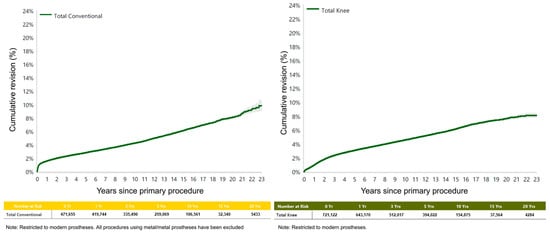
The long-stop rule, under the UK Consumer Protection Act (CPA) 1987, imposes a 10-year limitation period for product liability claims, providing legal certainty for manufacturers and consumers. However, this timeframe is increasingly problematic in the case of medical devices, particularly implantable ones, which can fail decades after implantation. This review considers an extension to the long-stop period for medical devices, emphasising the need for patient protection, legal clarity, and reduced clinician burden, and contrasts the current UK system with the EU’s proposed 25-year long-stop period under the recently implemented 2024 Product Liability Directive. Through case studies, including surgical mesh and orthopaedic implants, the discussion highlights the challenges posed by delayed failure modes and the resulting difficulties in seeking redress within the 10-year window. Lastly, the role of publicly funded redress schemes and the evolving legal landscape are examined, underscoring the importance of reconsidering the current statutory limitations. Extending the long-stop period, combined with the use of explant analysis to evaluate defective medical devices, is proposed as a means to enhance patient safety and align with ongoing advancements in medical technology and regulation.
Full article

Figure 1
Open AccessArticle
Small Firms, Big Gap: Rethinking MSME Rescue in EU Insolvency Law
by
Emilie Ghio
Laws 2025, 14(6), 99; https://doi.org/10.3390/laws14060099 - 17 Dec 2025
Abstract
This paper argues that despite two decades of reform, the European Union’s (EU) insolvency framework remains structurally and behaviourally inaccessible to micro-, small-, and medium-sized enterprises (MSMEs). While policy rhetoric has embraced the idea of a “rescue culture,” practical implementation has prioritised larger,
[...] Read more.
This paper argues that despite two decades of reform, the European Union’s (EU) insolvency framework remains structurally and behaviourally inaccessible to micro-, small-, and medium-sized enterprises (MSMEs). While policy rhetoric has embraced the idea of a “rescue culture,” practical implementation has prioritised larger, well-resourced firms. Drawing on international guidance and case studies from Ireland, France, and the United States (US), the paper shows that legal reform alone is insufficient. Structural complexity, cultural stigma, and weak institutional outreach continue to block MSMEs’ access to rescue. The paper proposes a forward-looking agenda for EU reform centred on three pillars: legal simplification tailored to MSMEs, institutional scaffolding to enhance visibility and support, and cultural reframing to normalise restructuring as a second chance. It concludes that a functioning rescue culture must treat MSMEs not as scaled-down versions of large firms but as distinct users with unique constraints and capacities.
Full article
(This article belongs to the Special Issue Developments in International Insolvency Law: Trends and Challenges)
Open AccessArticle
Integration of Artificial Intelligence into Criminal Procedure Law and Practice in Kazakhstan
by
Gulzhan Nusupzhanovna Mukhamadieva, Akynkozha Kalenovich Zhanibekov, Nurdaulet Mukhamediyaruly Apsimet and Yerbol Temirkhanovich Alimkulov
Laws 2025, 14(6), 98; https://doi.org/10.3390/laws14060098 - 12 Dec 2025
Cited by 1
Abstract
Legal regulation and practical implementation of artificial intelligence (AI) in Kazakhstan’s criminal procedure are considered within the context of judicial digital transformation. Risks arise for fundamental procedural principles, including the presumption of innocence, adversarial process, and protection of individual rights and freedoms. Legislative
[...] Read more.
Legal regulation and practical implementation of artificial intelligence (AI) in Kazakhstan’s criminal procedure are considered within the context of judicial digital transformation. Risks arise for fundamental procedural principles, including the presumption of innocence, adversarial process, and protection of individual rights and freedoms. Legislative mechanisms ensuring lawful and rights-based application of AI in criminal proceedings are required to maintain procedural balance. Comparative legal analysis, formal legal research, and a systemic approach reveal gaps in existing legislation: absence of clear definitions, insufficient regulation, and lack of accountability for AI use. Legal recognition of AI and the establishment of procedural safeguards are essential. The novelty of the study lies in the development of concrete approaches to the introduction of artificial intelligence technologies into criminal procedure, taking into account Kazakhstan’s practical experience with the digitalization of criminal case management. Unlike existing research, which examines AI in the legal profession primarily from a theoretical perspective, this work proposes detailed mechanisms for integrating models and algorithms into the processing of criminal cases. The implementation of AI in criminal justice enhances the efficiency, transparency, and accuracy of case handling by automating document preparation, data analysis, and monitoring compliance with procedural deadlines. At the same time, several constraints persist, including dependence on the quality of training datasets, the impossibility of fully replacing human legal judgment, and the need to uphold the principles of the presumption of innocence, the right to privacy, and algorithmic transparency. The findings of the study underscore the potential of AI, provided that procedural safeguards are strictly observed and competent authorities exercise appropriate oversight. Two potential approaches are outlined: selective amendments to the Criminal Procedure Code concerning rights protection, privacy, and judicial powers; or adoption of a separate provision on digital technologies and AI. Implementation of these measures would create a balanced legal framework that enables effective use of AI while preserving core procedural guarantees.
Full article
(This article belongs to the Special Issue Criminal Justice: Rights and Practice)
Open AccessArticle
Transformative Public Procurement of Artificial Intelligence
by
Giovanni Fabio Licata
Laws 2025, 14(6), 97; https://doi.org/10.3390/laws14060097 - 10 Dec 2025
Abstract
This study examines the role of public procurement of artificial intelligence (AI) as a catalyst for transformative change in State functions. Building on the concept of transformative law, it argues that law should not merely regulate technological innovation but actively guide and shape
[...] Read more.
This study examines the role of public procurement of artificial intelligence (AI) as a catalyst for transformative change in State functions. Building on the concept of transformative law, it argues that law should not merely regulate technological innovation but actively guide and shape it in accordance with democratic values and the rule of law. Within this framework, public procurement emerges as a strategic instrument for (re)structuring the very configuration of public governance and institutions. This analysis highlights key legal issues surrounding the procurement of AI, starting with the premise of its dual function: on the one hand, as a tool for optimising acquisition procedures and, on the other, as the object of acquisition itself. Among the most pressing issues analysed are the definitions of algorithmic legality and accountability, the asymmetry of expertise between public authorities and private suppliers, and the regulatory complexity that characterises the field, especially in light of the recently adopted EU AI Act. Finally, this study conceptualises the public procurement of AI as a form of legal infrastructure, capable of securing systemic and enduring transformations for the State and its institutions.
Full article
Open AccessArticle
Narrative Injustice and the Legal Erasure of Indigeneity: A TWAIL Reframing of the Kashmiri Pandit Case in Postcolonial International Law
by
Shilpi Pandey
Laws 2025, 14(6), 96; https://doi.org/10.3390/laws14060096 - 10 Dec 2025
Abstract
This article examines the persistent legal invisibility of the Kashmiri Pandits within international frameworks on indigenous rights and internal displacement. Despite meeting definitional criteria under the United Nations Declaration on the Rights of Indigenous Peoples (UNDRIP) and the Guiding Principles on Internal Displacement,
[...] Read more.
This article examines the persistent legal invisibility of the Kashmiri Pandits within international frameworks on indigenous rights and internal displacement. Despite meeting definitional criteria under the United Nations Declaration on the Rights of Indigenous Peoples (UNDRIP) and the Guiding Principles on Internal Displacement, the community remains unrecognised as either indigenous or internally displaced. Drawing on Third World Approaches to International Law (TWAIL), constructivist norm diffusion and decolonial intersectional critique, this article argues that this exclusion arises not from normative ambiguity but from geopolitical selectivity and epistemic suppression. Through doctrinal analysis of India’s treaty commitments, including its accession to the Genocide Convention (1959) and its interpretative reservation to Article 1 of the International Covenant on Economic, Social and Cultural Rights (ICESCR) and International Covenant on Civil and Political Rights (ICCPR) (1979), this study reveals how recognition is constrained by state narratives of sovereignty and secularism. Supported by evidence from the NHRC inquiry, IDMC displacement data, and comparative experiences such as Native American recognition this paper demonstrates that categories of protection in international law are applied unevenly, depending on political compatibility rather than legal principle. It calls for renewed engagement with epistemic justice and narrative accountability in rethinking indigeneity and displacement in postcolonial contexts.
Full article
(This article belongs to the Special Issue Human Rights in the Age of Globalisation: Challenges and Opportunities)
Open AccessArticle
Harmonisation of the Albanian Anti-Money Laundering Law with the EU Anti-Money Laundering Directive: Challenges and Perspectives
by
Gledis Nano and Gentjan Skara
Laws 2025, 14(6), 95; https://doi.org/10.3390/laws14060095 - 1 Dec 2025
Abstract
As Albania aspires to join the EU by 2030, harmonisation of existing and future legislation and ensuring proper implementation remain the main priorities. Several working groups have been established to deal with harmonisation and enforcement. Although scepticism about Albania’s 2030 membership exists among
[...] Read more.
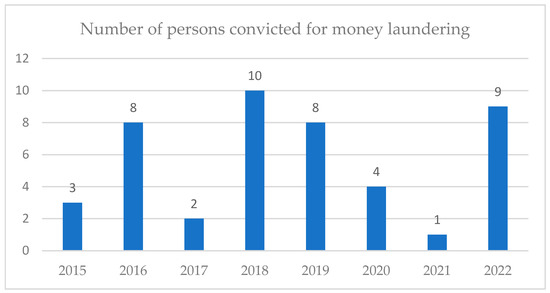
As Albania aspires to join the EU by 2030, harmonisation of existing and future legislation and ensuring proper implementation remain the main priorities. Several working groups have been established to deal with harmonisation and enforcement. Although scepticism about Albania’s 2030 membership exists among Albanian scholars and politicians about whether public administration can address this daunting task, Albanian citizens are hopeful about finally joining the EU. This paper analyses the extent to which Albanian legislation on the prevention of money laundering and financing of terrorism aligns with the Anti-Money Laundering Directives and how it is enforced. Using both traditional legal and comparative methodologies, this paper compares whether the Albanian anti-money laundering and countering the financing of terrorism law aligns with the Anti-Money Laundering regime and assesses the level of enforcement of harmonised legislation. This paper concludes that, although the Albanian Law on anti-money laundering and terrorist financing largely aligns with the AML/FT Directive, proper implementation remains a challenge due to limited enforcement capacities, weak legal structures, and an essentially cash-based economy with a substantial informal economy.
Full article
(This article belongs to the Section Criminal Justice Issues)
►▼
Show Figures

Figure 1
Open AccessArticle
An Exploratory Study on Application of Inter-Agency Standing Committee (IASC) Guidelines in Borno State, Northeastern Nigeria
by
Osita Kingsley Odo, Stephen Meyers, Lilian Ebere Anazube, Ijeoma J. Ogu and Ijeoma Igwe
Laws 2025, 14(6), 94; https://doi.org/10.3390/laws14060094 - 30 Nov 2025
Abstract
Persons with disabilities (PWDs) face disproportionate risks during humanitarian crises, yet their inclusion in aid delivery remains limited. To address this, the Inter-Agency Standing Committee (IASC) introduced the Guidelines on the Inclusion of Persons with Disabilities in Humanitarian Action in 2019. The IASC
[...] Read more.
Persons with disabilities (PWDs) face disproportionate risks during humanitarian crises, yet their inclusion in aid delivery remains limited. To address this, the Inter-Agency Standing Committee (IASC) introduced the Guidelines on the Inclusion of Persons with Disabilities in Humanitarian Action in 2019. The IASC guidelines provide a global framework for mainstreaming disability inclusion. This exploratory study examines how these guidelines are applied in Borno State, Northeastern Nigeria, a region marked by protracted conflict, displacement and insecurity. Using a qualitative phenomenological approach, data were gathered through in-depth interviews from 20 humanitarian practitioners and supplemented with secondary sources. Thematic analysis revealed that while organisations adopted strategies such as data disaggregation, door-to-door outreach and local committee representation, implementation was inconsistent and constrained by cultural beliefs about disability, political interference, population displacement and weak monitoring standards. The findings also highlighted that although the IASC Guidelines are good in principle, the guidelines require context-specific adaptation, stronger organisational commitment and active inclusive engagement with PWDs and their representative organisations. The study recommends incorporating disability inclusion through mandatory organisational policies, dedicated funding, community-based advocacy and improved data systems to ensure that humanitarian responses are both inclusive and sustainable.
Full article
(This article belongs to the Special Issue Disability Rights and the Law: Ensuring Equal Access and Inclusion for Persons with Disabilities Around the World)
►▼
Show Figures

Figure 1
Open AccessArticle
Law Enforcement on Misuse of Social Assistance Funds: A Legal Sociology Perspective
by
Wiwie Heryani, Ratnawati Ratnawati, Maskun Maskun, Amaliyah Amaliyah, Andi Muhammad Aswin Anas, Muhammad Hasrul, Asmunandar Asmunandar, Muhammad Surya Gemilang and Wafiq Azizah
Laws 2025, 14(6), 93; https://doi.org/10.3390/laws14060093 - 30 Nov 2025
Abstract
Social assistance is one of the primary programs organized in developing countries in a bid to reduce poverty. In Indonesia, the government has allocated IDR 152 trillion toward poverty alleviation. However, the persistent misuse of social assistance funds has unfolded to be a
[...] Read more.
Social assistance is one of the primary programs organized in developing countries in a bid to reduce poverty. In Indonesia, the government has allocated IDR 152 trillion toward poverty alleviation. However, the persistent misuse of social assistance funds has unfolded to be a serious concern. According to the Ombudsman of Indonesia, approximately 81.37% of the 1004 complaints received between 29 April and 29 May 2020 were related to the misuse and misallocation of COVID-19 social assistance funds. Therefore, this study aims to comprehensively describe the legal enforcement model for preventing the misuse of social assistance funds and to identify the challenges faced by law enforcement from the perspective of legal sociology. In order to achieve the stated objectives, a qualitative approach grounded in legal sociology was adopted, utilizing empirical study methods. Data were collected through in-depth interviews with academics specializing in administrative law and public policy, as well as through an extensive review of the relevant literature. Subsequently, the gathered data were analyzed qualitatively using a descriptive approach. The obtained results showed that the key challenges in preventing the misuse of social assistance funds include weak regulatory frameworks, limited competency among law enforcement officials, and inadequate institutional infrastructure. Cultural factors were also found to play a significant role in influencing the effectiveness of law enforcement. Based on these insights, preventive measures were inferred to be essential and should focus specifically on strengthening the legal structure and utilizing technological tools to enhance transparency and monitoring. Accordingly, the substance of social assistance laws must be revised to include more detailed and specific provisions, while repressive measures should impose stricter sanctions on individuals who engage in misuse. Fostering a shift in the legal culture of society was also considered very important. These combined efforts are expected to reduce the misuse of social assistance funds, improve legal enforcement effectiveness, and essentially contribute to poverty reduction in Indonesia.
Full article
(This article belongs to the Special Issue Building a Culture of Integrity: The Role of Anti-Corruption Laws)
Open AccessArticle
National Implementation of the Kunming–Montreal Global Biodiversity Framework: A Comparative Law Perspective
by
Ancui Liu
Laws 2025, 14(6), 92; https://doi.org/10.3390/laws14060092 - 28 Nov 2025
Abstract
The Kunming–Montreal Global Biodiversity Framework (GBF) sets target-based and actionable commitments for the parties to the Convention on Biological Diversity (CBD) to facilitate its implementation. It is a strategic document that guides global biodiversity governance up to 2030 and beyond, including 2050. To
[...] Read more.
The Kunming–Montreal Global Biodiversity Framework (GBF) sets target-based and actionable commitments for the parties to the Convention on Biological Diversity (CBD) to facilitate its implementation. It is a strategic document that guides global biodiversity governance up to 2030 and beyond, including 2050. To achieve the 4 goals and 23 targets of the GBF, the parties to the CBD must adopt national biodiversity strategies and action plans, establish national targets, and strengthen their domestic biodiversity laws. By comparing China and the European Union’s (the EU’s) legal approaches to operationalizing the GBF targets, insights are obtained into how to improve both China and the EU’s national implementation of the GBF as well as the global collective implementation. Both China and the EU should formalize national targets and requirements as outlined in their respective policy documents. They also need to streamline legal frameworks and measures related to biodiversity and enhance the effective implementation of the legal measures, against the backdrop of China enacting its environmental code and the EU adopting the Nature Restoration Law.
Full article
(This article belongs to the Section Environmental Law Issues)
Open AccessArticle
The Jurisprudence of Functional Identity: Artificial Intelligence as a Combatant in Warfare Under Article 43(2) of Additional Protocol I to the Geneva Conventions
by
Johnny Sakr
Laws 2025, 14(6), 91; https://doi.org/10.3390/laws14060091 - 27 Nov 2025
Abstract
Article 43(2) of Additional Protocol I to the Geneva Conventions defines combatants but does not specify that they must be human. Bundle Theory, which views identity as a collection of rights and duties, suggests that legal personhood is unnecessary for combatant status. Artificial
[...] Read more.
Article 43(2) of Additional Protocol I to the Geneva Conventions defines combatants but does not specify that they must be human. Bundle Theory, which views identity as a collection of rights and duties, suggests that legal personhood is unnecessary for combatant status. Artificial intelligence, while not a legal person, could meet the functional criteria of a combatant, such as Roe v Wade (1973), where personhood was contextually recognised. Similarly, artificial intelligence could be classified as a combatant under international as participating in hostilities and adhering to a command structure. This parallels Roe v. humanitarian law without being granted full legal personhood.
Full article
Open AccessArticle
Mapping Religion in Australian Federal Legislation: An Empirical Analysis of 288 Federal Statutes
by
Maria Ambrose and Renae Barker
Laws 2025, 14(6), 90; https://doi.org/10.3390/laws14060090 - 26 Nov 2025
Abstract
►▼
Show Figures
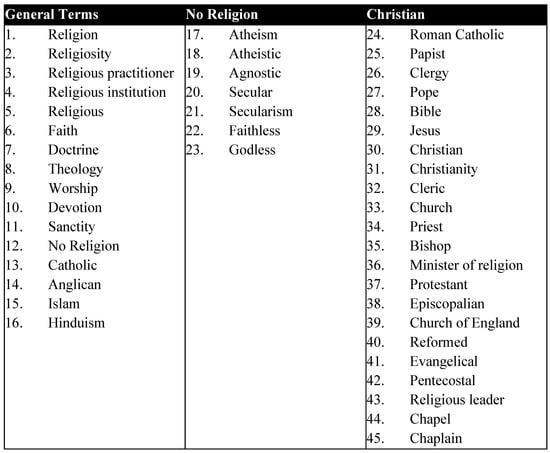
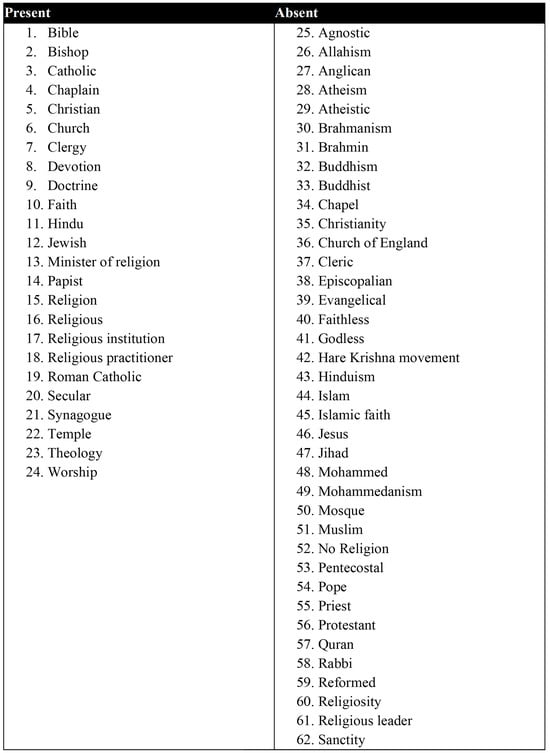
This article presents the first systematic, empirical mapping of explicit references to religion in Australian federal legislation. Drawing on a dataset of 288 statutes in force as of March 2024, the analysis employs a dictionary of 71 religious terms to identify the scope
[...] Read more.
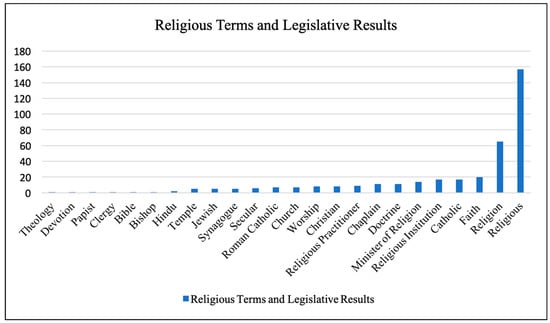
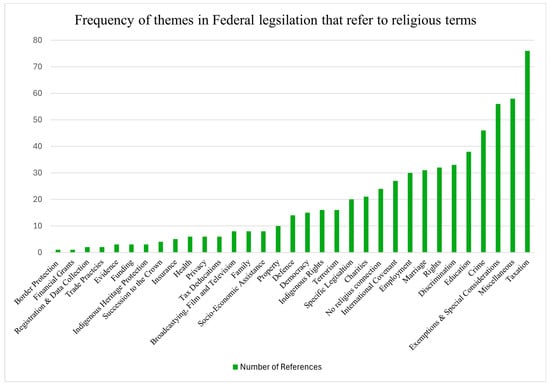
This article presents the first systematic, empirical mapping of explicit references to religion in Australian federal legislation. Drawing on a dataset of 288 statutes in force as of March 2024, the analysis employs a dictionary of 71 religious terms to identify the scope and nature of legislative engagement with religion. The analysis reveals a distinctive legislative mode of balancing freedom of religion or belief through legislation, and, in particular, statutory exemptions, rather than judicial review, advancing the understanding of Australia’s pragmatic approach to church–state relations. The study reveals that religion appears across a wide spectrum of federal law, with taxation, exemptions and special considerations, discrimination, rights, education, employment, crime, terrorism, and marriage emerging as key themes. The prevalence of taxation provisions underscores the financial dimension of the state–religion relationship, while the frequency of exemptions highlights the distinctive Australian approach of balancing freedom of religion or belief at the legislative stage rather than through judicial proportionality analysis. These findings complicate portrayals of Australia as a “secular” state and demonstrate the entanglement of religion and federal law, providing a foundation for further research.
Full article

Figure 1
Open AccessArticle
Communication Barriers in the Criminal Courts of England and Wales: Experiences of Defendants with Mental Health Conditions or Learning Disabilities
by
Edmore Tendai Masendeke
Laws 2025, 14(6), 89; https://doi.org/10.3390/laws14060089 - 26 Nov 2025
Abstract
In recent years, the need to provide communication support for defendants with mental health conditions or learning disabilities in criminal cases has received increased attention in international, regional and domestic law. However, defendants in England and Wales have inconsistent access to this type
[...] Read more.
In recent years, the need to provide communication support for defendants with mental health conditions or learning disabilities in criminal cases has received increased attention in international, regional and domestic law. However, defendants in England and Wales have inconsistent access to this type of support. Furthermore, limited empirical research has examined this category of defendants’ experiences and the barriers that hinder their access to communication support in criminal court proceedings. This paper addresses this gap by investigating the experiences of former defendants in England and Wales and analysing the findings from a human rights perspective. Drawing on telephone and group interviews, it examines the extent to which these individuals accessed communication support and the barriers they encountered. Most participants reported receiving no communication support to help them understand what was happening or being said in court. Five key barriers were identified: professional knowledge gaps; stigma and discrimination; absence of a formal diagnosis; the speed of court proceedings; and inequalities in statutory provisions. Addressing these barriers is essential not only for ensuring equal access to justice in criminal courts in England and Wales but also for advancing the broader principles of inclusion and disability rights in legal systems worldwide.
Full article
(This article belongs to the Special Issue Disability Rights and the Law: Ensuring Equal Access and Inclusion for Persons with Disabilities Around the World)
Highly Accessed Articles
Latest Books
E-Mail Alert
News
Topics
Topic in
Social Sciences, Societies, Laws, World, Psychology International, IJCS
Motivated Social Cognition in Individuals, Organizations, and Societies
Topic Editors: Andrew S. Franks, Hajime OtaniDeadline: 31 October 2027
Special Issues
Special Issue in
Laws
Human Rights in the Age of Globalisation: Challenges and Opportunities
Guest Editor: Demet Asli CaltekinDeadline: 26 February 2026
Special Issue in
Laws
Repelling Asylum-Seekers in Europe? Asylum-Seekers as an “Anomaly” in EU and UK Migration Laws and Policies
Guest Editor: Sylvie Da LombaDeadline: 28 February 2026
Special Issue in
Laws
Vol. II of Civic Engagement, Justice, and the Law in a National and International Context
Guest Editors: Bolek Kabala, Justin Dyer, Lee Ward, Casey D. Thompson, Adam M. CarringtonDeadline: 1 March 2026
Special Issue in
Laws
Rethinking Law for Nonhuman Minds: AI Agents and the Transformation of Legal Fundamentals
Guest Editor: Daniel J. GervaisDeadline: 16 March 2026